Introduction
Pope Francis’ encyclical Laudato Si’ calls the Church and every person of good will to a renewed relationship with creation. It frames care for the environment not as an optional add-on but as an integral dimension of Christian discipleship and pastoral responsibility. As postulants preparing for religious life and priestly ministry, we are invited to make ecological conversion part of our spiritual formation, pastoral practice, and daily witness to the Gospel. From this starting point, formation becomes a holistic process that shapes mind, heart, and habit toward the flourishing of the whole human family and the earth that sustains it.
“This reflection is therefore not only an exercise in study but a commitment: a pledge to integrate care for creation into our spiritual lives, pastoral ministry, and daily witness to the Gospel in a world marked by both beauty and fragility.”
Integrating Ecology into Formation
Integrating ecology into the postulancy programme requires intentional curriculum design and lived practice. Theological study includes scriptural foundations for creation care, the Church’s social teaching, and the theological anthropology that sees creation as a gift entrusted to humanity. Formators can embed Laudato Si’ into courses on moral theology, pastoral ministry, and liturgy so that ecological concerns are not isolated topics but woven into the fabric of priestly identity.
Formation must also cultivate practical competencies. Seminarians need to learn about sustainable living, ethical consumption, and community-based stewardship. Workshops on energy conservation, waste reduction, and sustainable agriculture equip future ministers to model and teach responsible practices in parishes and religious communities. These skills prepare postulants to accompany laity who face ecological anxieties and to propose realistic, faith-rooted responses.
Practical Practices and the Garden as Classroom
A garden can be a powerful locus of formation. Working the soil teaches patience, humility, and interdependence. In a place like Northern Sri Lanka, where sunlight and agricultural rhythms shape daily life, tending a garden becomes both spiritual discipline and pastoral pedagogy. Gardening forms habits: it fosters gratitude for seasonal gifts, cultivates empathy for those who labour on the land, and reveals the limits of human control in the face of changing climates.
Practical activities such as communal gardening, and small-scale agroecology experiments create opportunities for prayer, reflection, and community building. They also make concrete the encyclical’s critique of consumerism by encouraging a simpler lifestyle rooted in care rather than consumption. As postulants learn to plant, prune, and harvest, they internalize lessons about stewardship that will shape their preaching, counselling, and community leadership.
Spiritual and Pastoral Formation and the Example of Saint Francis
Laudato Si’ opens with the example of Saint Francis of Assisi, whose love for creation models a spirituality of wonder and kinship. Formation that aspires to ecological conversion therefore nurtures interior dispositions: reverence, gratitude, and contemplative attention to the natural world. Prayer practices include creation-centered liturgies, outdoor retreats, and scriptural meditations that highlight God’s presence in the creation.
Spiritual formation also requires conversion of desire. The encyclical’s call to a new lifestyle challenges postulants to move beyond consumerist habits toward simplicity, solidarity, and sobriety. This conversion is not merely personal asceticism; it is a pastoral stance that enables future priests to accompany communities in making sustainable choices and to advocate for policies that protect the vulnerable and the environment.
We minister in contexts where ecological degradation intersects with poverty and social injustice. Formation must therefore include pastoral skills for advocacy, community organizing, and ethical discernment. Postulants will be trained to listen to local communities, to amplify the voices of those most affected by environmental harm, and to collaborate with lay movements and civil society.
Challenges and the Call to Conversion
Integrating ecology into formation faces practical and cultural challenges: limited resources, competing curricular demands, and entrenched consumerist attitudes. Overcoming these obstacles requires creativity, institutional commitment, and a willingness to reorder priorities. Formation communities need to be willing to lead by example, adopting sustainable practices in their own houses and demonstrating that ecological conversion enriches rather than diminishes communal life.
The call is ultimately one of conversion—personal, communal, and structural. It asks postulants to embrace a vision of vocation that includes care for creation as essential to pastoral fidelity. This conversion will shape how priests preach, how communities live, and how the Church witnesses to the Gospel in a wounded world.
Conclusion
Laudato Si’ invites postulants to a formation that is both deeply spiritual and concretely practical. By integrating theological reflection, hands-on practices like gardening, and pastoral training, formation programs can form priests who embody a new lifestyle of simplicity, solidarity, and stewardship. In doing so, they will not only safeguard the common home but also strengthen the Church’s capacity to accompany the poor, heal relationships, and proclaim the Gospel with integrity. The journey begins with small, faithful steps— learning to love creation as Saint Francis did, cultivating habits that witness to a different way of living, and committing to a lifelong conversion that honours God, neighbour, and earth.
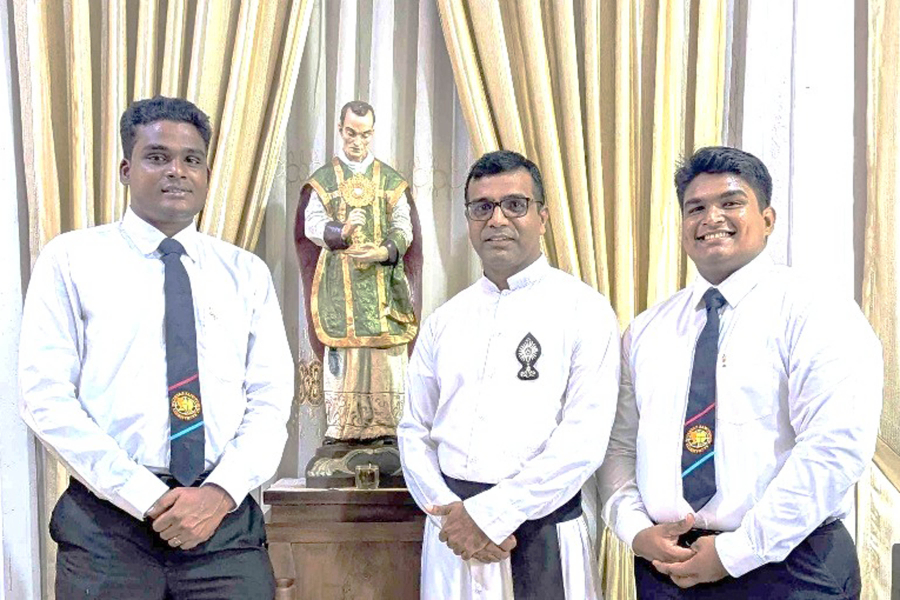
Father Priyantha Angodage SSS
Brother Noel Shean Thiyagarajha
Brother Jude Malinda Sampath Perera
Postulancy, Province Christ the Bread of Life, Sri Lanka
