A Broken Bread for a Broken World
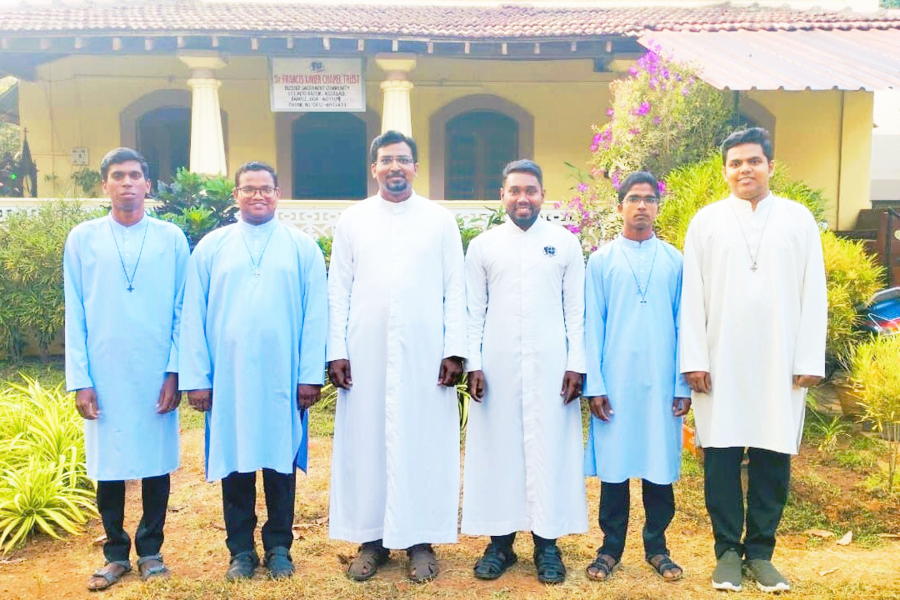
The reflection on Eucharist, ecology, and human hunger emerges strongly from the teaching of Pope Francis’ encyclical Laudato Si’. At the heart of this teaching lies a profound conviction: the cry of the Earth and the cry of the poor are one, and that true Eucharistic adoration calls us not away from the world’s suffering but into it with compassion and responsibility. For the novices of the Congregation of the Blessed Sacrament in Goa, living amid India’s contrasts of growth, hunger, and ecological fragility, the Eucharist becomes a formative and missionary force, shaping how we see Christ in the hungry and respond concretely. It challenges us to allow the Eucharist to shape the way we see, pray, live, and respond.
“Give Us This Day Our Daily Bread”: Human Hunger in the Indian Context
In India, hunger persists despite abundant food, affecting children, women, migrant workers, and indigenous communities. In Goa it is often seen as food insecurity, unemployment, and the marginalisation of fishing and farming communities. Alongside material hunger are social and spiritual hungers for dignity, belonging, and meaning, all intensified by environmental degradation that hurts the poor most. For SSS novices, hunger is not an abstract idea. It is a Eucharistic challenge. To love the Eucharist is to respond to those who lack daily bread. The Eucharist teaches us that worship and service, adoration and compassion, cannot be separated.
“Take, Bless, Break, Give”: Eucharist and Hunger
The Eucharist is not only the sacramental presence of Jesus on the altar; it is also a powerful call to recognize Christ in the suffering. In Matthew 25:35, Jesus identifies Himself with the hungry: “I was hungry and you gave me food”. This teaching allows no division between devotion and justice. The bread we receive points to the broken lives of those who lack daily food, reminding us that true Eucharistic devotion must lead to sharing and solidarity. As Christ becomes bread for the life of the world, we too are called to be bread broken for others, making hunger not just a social concern but a deeply Eucharistic responsibility.
Listening to History and the Cry of the Poor
Hunger in India is not accidental but rooted in historical exploitation, unjust development, and the breakdown of harmony between people and land. Eucharistic adoration teaches us to listen to the real cries of farmers, fisherfolk, and migrant workers, helping us see hunger not as a statistic but as a shared wound caused by unjust structures. Scripture reminds us that creation is a gift to be cared for, and the Eucharist restores relationships, with God, and creation - calling us to stewardship, solidarity, and care rather than domination and exploitation.
The Novitiate: A Time of Inner Conversion
The novitiate is a sacred and privileged period of formation. While novices may not have the power to solve hunger or structural injustice, they are invited to undergo inner conversion. Attitudes toward comfort, consumption, privilege, and waste are gradually purified. Through prayer, adoration, silence, and reflection, hunger is no longer distant; it becomes the wounded face of Christ. Gratitude for food, sensitivity to injustice, and reverence for creation begin to take root. The Eucharist slowly forms the novice into a compassionate person, ready to serve and share.
From the Altar to Life: The Eucharist as a Response to Hunger
At the Blessed Sacrament Novitiate in Goa, reflection on the ecological dimension of the Eucharist has concrete implications. The Eucharist we celebrate and adore is the sacrament of self-giving love. It challenges us to simplicity in a culture increasingly driven by consumption and status.
What We Live in the Novitiate Today
- Plan meals carefully to avoid food waste; reuse leftovers responsibly.
- Introduce at least one simple meal day on every Friday as an act of solidarity with the poor.
- Prefer local, seasonal, and sustainably produced food, supporting small farmers and fisherfolks.
- Practice strict water discipline: fix leaks immediately, limit excessive use, reuse water for plants.
- Reduce plastic by avoiding disposable bottles, cutlery, and packaging.
- Introduce waste segregation and composting of organic waste.
- Maintain a community garden (vegetables, herbs, or trees) as part of formation work.
- Make a habit of asking after night prayer: “How does this Eucharist want to be lived today?”
- Foster a culture of inclusive fraternity beyond language, region, caste, or background.
- Celebrate the Indian Rite Eucharist as an inculturated and ecological expression of faith,
- Practice shared responsibility: rotating services, transparent use of resources, common decision-making.
- Address conflicts through dialogue and reconciliation in the form of Emotional Clearance, not silence or avoidance.
- Practice regular silence and simplicity, resisting constant digital and consumer stimulation.
- Encourage spiritual accompaniment that helps novices name their own inner hungers honestly.
What We Commit to Live
- Connect Eucharistic adoration intentionally with the cries of people and creation (specific intentions).
- Link Scripture reflection with real-life issues: hunger, injustice, environment, and hope.
- Ensure that every major community activity (celebration, feast, project) includes:
- a concern for the poor,
- an ecological choice,
- and a moment of thanksgiving.
- Support for migrant workers and nearby poor families.
- Participate in parish or diocesan efforts for education, healthcare access, and legal awareness for the marginalized.
- Include regular ecological reflection during community prayer or recollection days.
- Encourage novices to spend time listening to the poor, and not only serving them.
Becoming Eucharist for the World
The dialogue between Laudato Si’, the Rule of Life, and the spirituality of Saint Peter Julian Eymard affirms one truth: every hunger is ultimately a hunger for communion. In a society divided by caste, religion, and class, Eymardian spirituality calls us to live fraternity, forgiveness, and shared life. Human hunger is met not only through charity, but through a Eucharistic way of becoming bread broken for others. From the Blessed Sacrament Novitiate, Goa, we affirm that the Eucharist is God’s response to the many hungers of India today, shaping our vision, lifestyle, and mission to witness hope, justice, communion, and care for our common home.
Father Martin Peter Raja, SSS
Novice Master
Province Kristu Jyoti, India
